Most real estate agents believe their biggest challenge is lead generation. The truth is, that’s often the easy part. The real, soul-crushing problem for high-performing agents is lead filtering.
Your inbox and CRM are likely full of contacts, but how many of them are serious buyers or sellers?
The single biggest drain on an agent’s profitability and energy isn’t a lack of leads; it’s the wasted hours spent chasing unmotivated prospects. This futile effort slows down your sales cycle, lowers your conversion rate, and accelerates burnout.
The goal isn’t to get more leads; it’s to identify and focus solely on the high-intent clients. We’re here to help you stop being a lead processor and start being a deal closer.
Why Not All Leads Are Created Equal
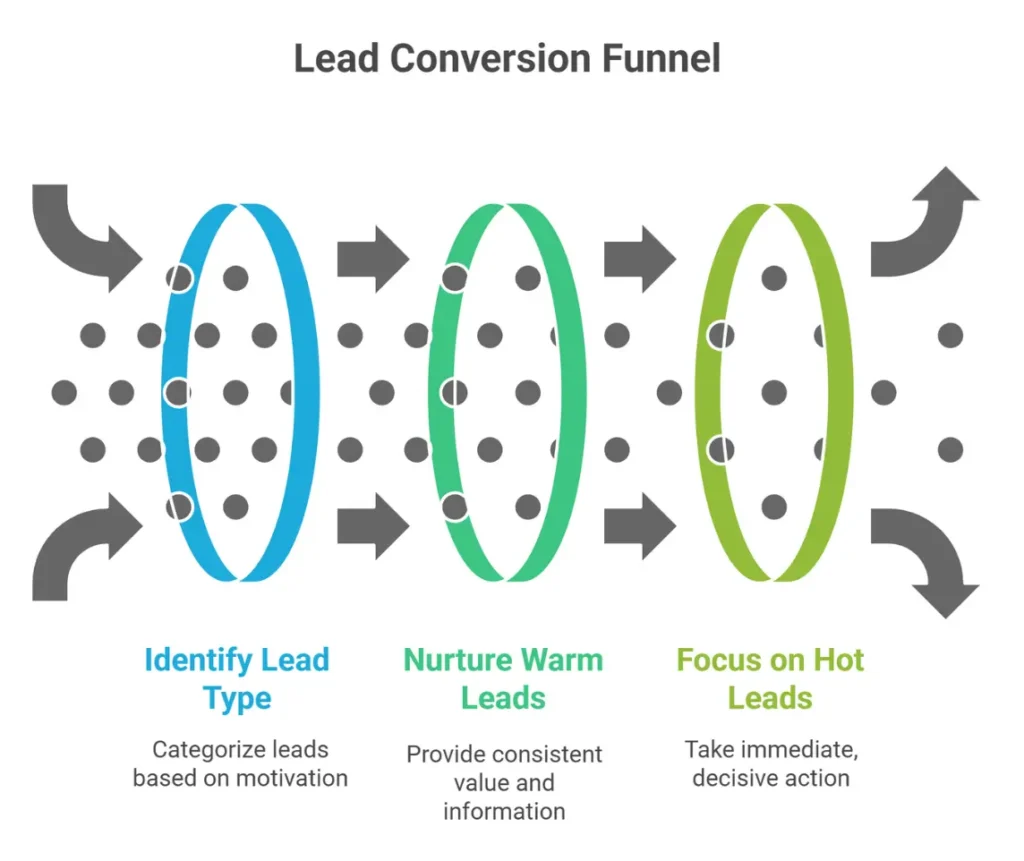
To master filtering, you must first understand that all leads exist on a motivation spectrum. Treating a “Cold” lead the same way you treat a “Hot” lead is the definition of wasted time.
- Hot Leads (0–3 Months): These clients are pre-approved, highly motivated, and need immediate, decisive action. They are ready to commit to an agent.
- Warm Leads (4–12 Months): They are interested, actively researching the market, and likely preparing their finances. They need consistent, value-driven nurturing.
- Cold Leads (12+ Months / Unqualified): This group consists of dreamers, lookie-loos, and those with significant financial or life obstacles preventing a transaction.
The most expensive mistake you can make is investing your personal, high-value time in trying to convert a Cold lead into a Hot lead. Learn to recognize the signs and move them out of your active pipeline immediately.
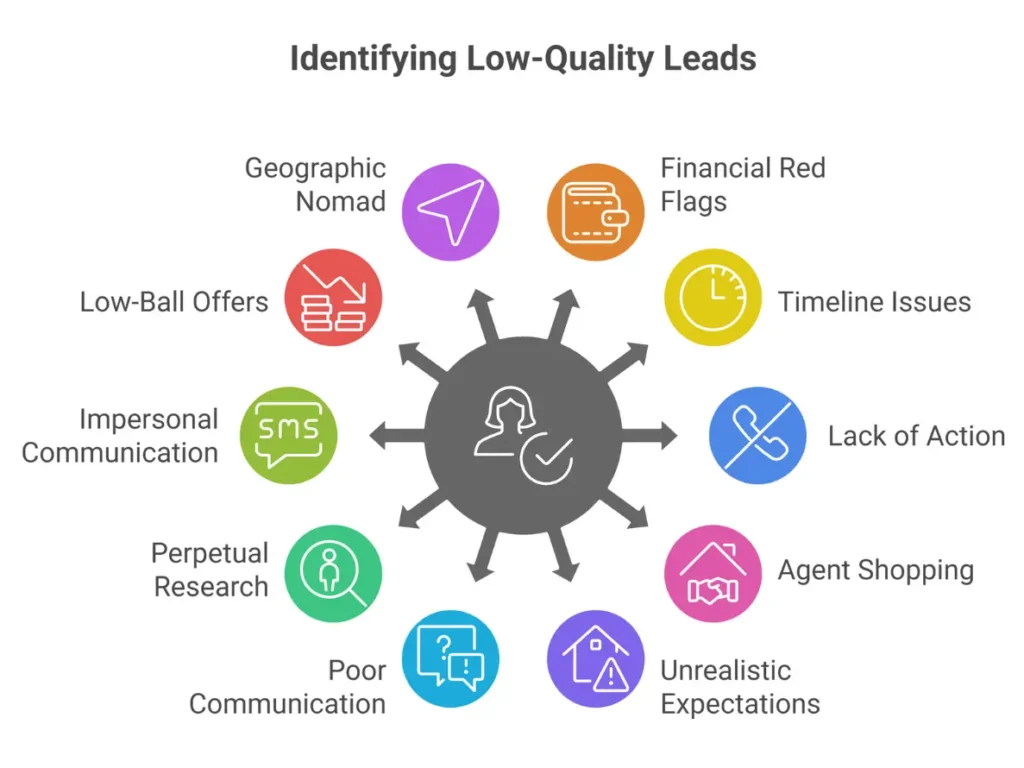
The 10 Common Signs of Low-Quality Leads
If you recognize more than three of these behaviors in a new lead, it’s a strong signal that you should adjust your approach—or stop chasing altogether.
1. The “No-Go” Financial Vetting
The biggest non-negotiable red flag. A serious buyer knows their budget is the first step. If a lead refuses to speak to a lender, won’t provide basic proof of funds, or dodges questions about their financial readiness, they are not ready to transact. They are likely using you for free market education.
2. The Evasive Timeline
When asked about their move date or closing goal, they respond with vague answers like “sometime this year,” “after the holidays,” or “we’re just looking.” They lack the urgency needed to commit to the necessary steps, meaning they will indefinitely postpone property viewings or listing agreements.
3. The Zero-Action Taker
High-quality leads take action when asked. If your prospect consistently fails to complete small, non-threatening tasks—like filling out a detailed property form, clicking a link to an informative video, or scheduling a 15-minute qualification call—their engagement is too low to merit your full attention.
 Pro Tips:
- The 3-Strike Rule: After three attempts to get a measurable commitment (pre-approval, consultation booking, or signed agreement), automatically shift the lead from the “Active” folder to the “Nurture” folder in your CRM.
- Use Conditional Forms: Implement a quick, 3-question online form before booking a first call to verify budget range, timeline, and pre-approval status. No form, no call.
- Value Your Time: Start your initial consultation with a clear agenda and explicitly state the next required step (e.g., “The purpose of this call is to determine if we are a good fit, and the next step is a pre-approval introduction”).
- Script Your Questions: Have scripted, non-negotiable questions ready to screen for urgency and financial readiness right on the first phone call.
4. The Undisclosed Agent Shopper
They dodge questions about working with other agents or explicitly refuse to sign a simple non-exclusive agency agreement. This indicates a lack of loyalty and seriousness. They view you as a source of free labor and information, not a trusted advisor.
5. Unrealistic Expectations
This is common. The prospect’s stated budget is drastically misaligned with their wish list and local market comps (e.g., demanding luxury finishes on an entry-level budget). They are either uninformed or highly resistant to the reality of the market, which leads to endless frustration and wasted showings.
6. Low-Quality Communication & Ghosting
Serious clients communicate with professionalism and clarity. The time-waster often communicates vaguely (“I liked it, I guess”), or worse, frequently ghosts after you’ve provided significant effort, showing a fundamental disrespect for your time.
7. The Perpetual Researcher
They are obsessed with perfect market timing, waiting for rates to drop, or speculating about a “housing crash.” They use global economic conditions as an excuse to perpetually delay their personal decision, moving from one market excuse to the next without ever taking action.
8. The “Only Look” Shopper
They insist on communicating only via impersonal means (text or email) and refuse a quick, low-commitment introductory phone call. They avoid personal connection because they are either not serious or fear being pressured into commitment.
9. The Extreme Low-Baller
While negotiation is part of the process, a red flag appears when a buyer insists on making initial offers that are consistently 20% or more below market value in a hot or neutral market. This indicates they are not serious about closing a deal but are hoping to catch a desperate seller.
10. The Geographic Nomad
A serious client is focused. If your lead is looking at properties in three different, non-adjacent cities (e.g., an urban core, a mountain suburb, and a coastal town), it’s a strong sign they have not committed to a lifestyle or a budget, and their search will be perpetually scattered.
The Real Cost of Low-Quality Leads
Understanding these signs allows you to recognize the actual hidden cost of poor filtering
Time is Your Most Expensive Resource
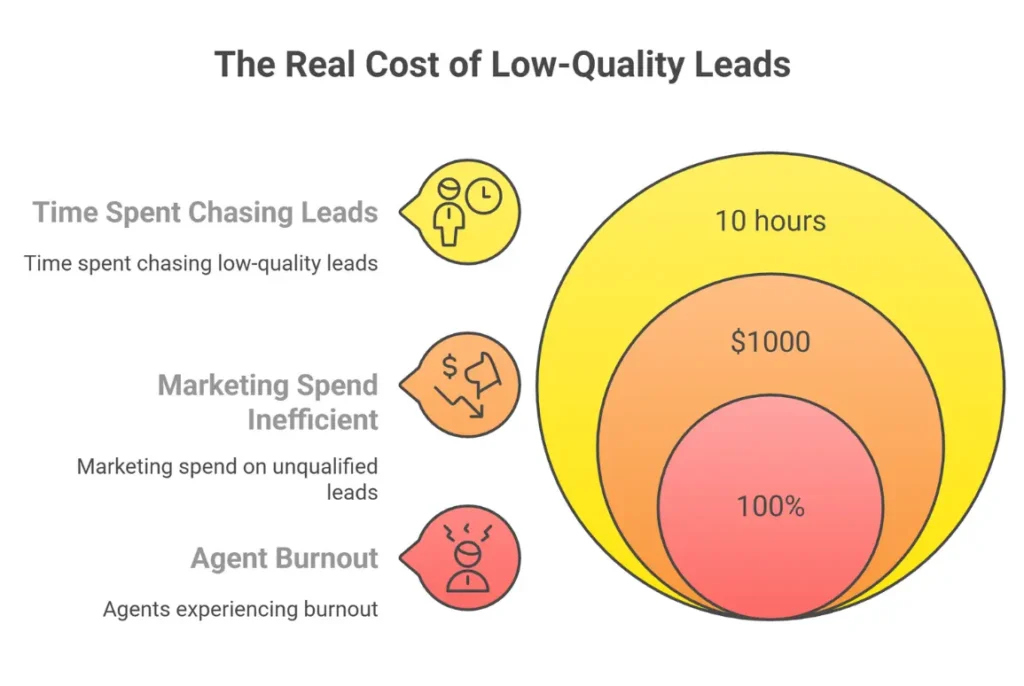
As a high-performing agent, your time is worth hundreds of dollars per hour. If you spend just 10 hours a week chasing the ten signs listed above, that’s equivalent to two full work weeks a month—lost income you can never reclaim.
Lowered Marketing ROI
Every unqualified lead you pay for (or chase) drags down your overall conversion rate. This makes your marketing spend, whether on portals or social media, inefficient. You end up paying more per closed deal because you’re flooding the top of your funnel with junk data.
Burnout
The emotional toll of constant rejection, being treated like a driver or an informational source, and putting in massive effort for zero return is the fastest path to agent burnout. Disciplined filtering protects your mental energy and keeps you focused on success.
The Filtering Solution & The Siftly Difference
The fix is a disciplined qualification system.
First, immediately implement a strict pre-qualification checklist (like the BANT method). Second, embrace automation. Use your CRM to automatically categorize Cold leads into long-term nurture campaigns, freeing your personal time.
This is exactly what SiftlyLeads was built to solve. Siftly doesn’t just deliver leads; it automates and perfects the early, time-wasting steps of qualification.
Our system pre-screens for motivation, financial readiness, and a genuine timeline, eliminating 90% of the time-wasting activities listed in this article. We deliver prospects ready for a closing conversation, not a qualification interrogation.
FAQs
Q: I have a huge database of cold leads. Should I just delete them?
Never delete leads! They are valuable long-term assets. Move them into a long-term nurture sequence (monthly market update emails, quarterly check-in texts) so they can “warm up” automatically without draining your personal time. These contacts might be ready in 18 months, and your automation should be there when they are.
Q: Is it okay to ask for financial proof on the very first call?
Yes, absolutely. You must frame it as a professional standard and a way to respect their time. Say, “To ensure I respect your time and only show you homes that fit your goals, our next step is a quick 5-minute conversation with my preferred lender to confirm your buying power. Does Tuesday or Wednesday work better?” This sets a serious, professional tone.
Q: How long should I chase a lead before classifying them as “Cold”?
A general rule is 30 days of active pursuit (calls, emails, texts) with no measurable commitment or action. If they fail to commit to the next small step (e.g., viewing a property, meeting for coffee, or pre-approval) within that 30-day window, move them to the automated nurture list.
Conclusion
The difference between a successful, profitable real estate career and a path to burnout often comes down to one skill: filtering. Stop letting unqualified prospects dictate your calendar.
By recognizing these 10 time-wasting signs and implementing a smart, disciplined filtering process, you can reclaim your time, dramatically improve your conversion rate, and finally build the sustainable, successful business you deserve.
Stop hustling bad leads. Start closing pre-qualified clients with SiftlyLeads today.